
Download our Free Guide:
Senior Living Explained
Learn what different types of senior living care are available and which one best fits your needs now and in the future.



Seniors learned to use Zoom, FaceTime, and similar communication technology during the pandemic to stay in touch with loved ones. If you’re still working, you might use video conferencing in your job. Telehealth uses this same type of technology to connect you with medical providers and caregivers as well as other resources, remotely. It’s one more tool seniors are using to age in place.
 Medicare covers telehealth services. You may have heard that this coverage was going to be discontinued. But rest assured, for the time being, at least. Congress has formally extended Medicare telehealth benefits through the end of 2027. That’s good news, because seniors have taken to telehealth in a big way. In a survey conducted by the American Medical Association, older adults gave telehealth six stars out of seven and said the experience was as good or even better than in-person visits.
Telehealth Offers Many Advantages
 Almost any senior can choose to use telehealth services, but the benefits are especially great for those who live in rural areas where there is little or no medical access nearby. Telehealth can also be a game-changer for older adults with limited mobility, transportation challenges, or when the weather is daunting, or you just don’t feel well enough to face the travel and time to seek medical care in person. Seeing the doctor from home keeps you out of germ-filled waiting rooms, helping you stay healthier. Telehealth also enables providers to more efficiently use their time without sacrificing one-on-one personal connection with patients.
Telehealth Services Are Versatile
You can accomplish a lot using telehealth services:
All that is great, but there is another key point seniors need to consider.
There Are Two Distinct Types of Telehealth
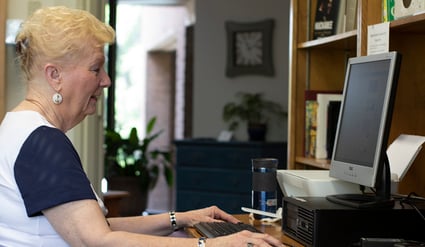 The services and advantages listed above relate to telehealth that connects you with known, personal providers. However, there is also a vast online market for direct-to-consumer-driven health care that is not a part of the traditional health system. You’ve seen the ads offering services to address weight loss, hair loss, dermatology, mental health counseling, sexual dysfunction, and more.
AARP warns that this fast-growing industry raises concerns about “the potential consequences to health, privacy, and wallets,” so you need to think carefully before using these services.
 Benefits associated with direct-to-consumer health care include convenient and fast access, more anonymous treatment for potentially embarrassing conditions, and potentially lower medication costs. On the flip side, although some of these entities do accept insurance to pay for consultation and prescriptions, many do not. Drug prices are not necessarily lower, and in some cases it can be unclear exactly what you’re getting, especially when it comes to compounded drugs, which are not FDA-regulated.
One of the biggest concerns is that whatever app or website you use for direct telehealth services is not in communication with your other health care provider(s). Lack of complete data about your health history and medications can lead to misdiagnosis or serious complications from inadvertent drug interactions.
Protecting Your Personal Data and Privacy
 Smart seniors understand how important it is to stay safe online. Telehealth chats and data transfer with your provider are secure and private, but there are steps you can take to limit your risk.
Note that direct-to-consumer entities have to follow the same federal and state laws that protect your health information as any other medical provider. However, keep in mind that they are for-profit businesses and can also use your personal non-health information for advertising and other purposes.
Telehealth Is Worth a Look
 Telehealth services are designed to help improve your health and well-being. Talk to your primary care provider and specialists if you haven’t already explored their telehealth care options to see what might work for you. And if you’re tempted to try a consumer website or app, research it carefully and be sure to let your current provider(s) know what you’re doing so you can stay healthy and safe.
Magnolia Manor Supports Your Health and Independence
Telehealth is one more way to stay healthy, independent, and connected to the people who help you thrive. Whether you’re seeing your doctor by video, tracking your blood pressure from home, or simply exploring what’s available, the right support makes all the difference.
At Magnolia Manor, we believe in making life easier and more connected for our residents, with a caring team and a welcoming community across our eight campuses in South Georgia. If you’re considering senior living for yourself or a loved one, there’s no better way to see what senior living is really like than to visit in person. Call us at 1-855-540-LIFE (5433) or contact us online to schedule a tour today!


Learn what different types of senior living care are available and which one best fits your needs now and in the future.