
Download our Free Guide:
Senior Living Explained
Learn what different types of senior living care are available and which one best fits your needs now and in the future.

.jpg)
.jpg?width=700&height=467&name=Mattie%20H.%20Marshall%202026%20Mothers%20Day%20Celebration%20(8485).jpg)
Most seniors say they want to age in place, remaining in the home and neighborhood they’ve known perhaps for many years. This is easy to understand, and it may be possible with some modifications or outside help. What will it take to ensure your home can accommodate your changing needs? Here’s how to determine whether your home is still suitable for aging.
 Make a Checklist
You’ll need to assess your current situation -- your personal needs as well as your home’s features. You’ll also need to consider how your needs might change in the future. Starting this process now will give you time to make any needed modifications, and it will help you think more clearly about whether remaining in this home really is your best option.
Daily Living
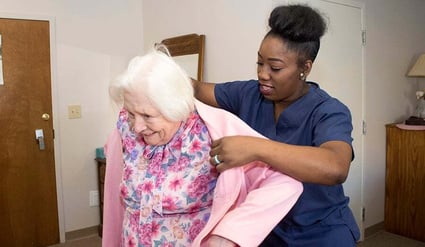 If you have a chronic disease or mobility difficulties, you may need more, or more extensive, help over time. Even if you are fully independent now, in the future you may want or need help with:
Household chores can also become more burdensome as we get older, so you may need help with:
-1.jpg?width=425&height=283&name=GSW%20Volunteers%20(4019)-1.jpg)
Who will provide whatever help you need? Family, friends, or neighbors may step in, but you may also need to hire home health services.
Safety
Falls are the number one risk for seniors, which is why it’s so important to maintain your physical strength and balance. But it is also critical to fall-proof your surroundings. Assess all aspects of your home, indoors and outside, to find and fix safety hazards. Here’s a handy room-by-room checklist.
.jpg?width=426&height=284&name=Americus%20NC%202023%20NSNCW%20Wheelchair%20Parade%20(9640).jpg) Small problems such as poor lighting, loose cords, or clutter are easy to correct. However, your home may need more extensive changes. Stairs can be a particular problem for many seniors, so you may want to consider installing a stair lift. If you need a walker or wheelchair in the future, will you be able to manage without remodeling portions of your home?
Small problems such as poor lighting, loose cords, or clutter are easy to correct. However, your home may need more extensive changes. Stairs can be a particular problem for many seniors, so you may want to consider installing a stair lift. If you need a walker or wheelchair in the future, will you be able to manage without remodeling portions of your home?
And what if you have a medical emergency? A remote patient monitoring (RPM) system can help track conditions such as high blood pressure and diabetes. It can also detect a fall and send an alert for you. Or you may want to invest in a wearable emergency medical alert device. In fact, tech-based innovations now address a number of common concerns, making it easier for seniors to age in place.
Cost
Comparing your current home assessment with your list of possible future needs and their costs will help you determine how well-suited your home is for continued aging in place.
Moving to a senior living community may be the better choice after all. The realities of aging in place can add up to more than you can comfortably handle, and you may eventually have to move anyway if your needs change significantly.
Magnolia Manor is Here for You
So, as you ’re considering how feasible it may be to remain in place, consider also how senior living compares. Understanding what communities such as Magnolia Manor are really like and the options available to you will help you make the most comfortable, rewarding, and cost-efficient decisions. Come see for yourself! Call 855-540-LIFE (5433) or schedule a tour. We'd love to welcome you!


Learn what different types of senior living care are available and which one best fits your needs now and in the future.