
Download our Free Guide:
Senior Living Explained
Learn what different types of senior living care are available and which one best fits your needs now and in the future.

.jpg)
.jpg?width=700&height=467&name=Residents%20on%20a%20Cellphone_Macon_5.2024%20(866).jpg)
Remember when you were growing up, how annoyed or embarrassed you felt when your parents kept trying to help you? “I can do it myself!” you’d declare. They only wanted what was best for you, but you wanted to establish your own identity.
Maintaining dignity matters at any age. Perhaps even more so for older adults who may sense they are starting to need help but don’t want to ask for it, or even admit it. If you’re an adult child with aging parents, you surely want to support them. But you’ll need to balance your desire to help with their desire to maintain control and dignity as they strive to remain independent.
/St%20Marys_Hawaii%20Luau_5474.jpg?width=425&height=283&name=St%20Marys_Hawaii%20Luau_5474.jpg) Loving Support, Not Meddling
Loving Support, Not Meddling
The kind of relationship you have with your parents will affect how you approach them to offer assistance and how amenable they are to accepting. You might live close by and do things for one another all the time. Close contact makes it easier to detect when Mom or Dad needs more support, and it might not feel so intrusive if you are willing to do a little more.
It’s also important to understand that while many aging adults are hesitant to ask for help, some can become outright demanding, expecting their adult children to “do for them” in unrealistic and overwhelming ways. Setting boundaries in terms of expectations on both sides is a good starting point that will protect you as well as your parents from overstepping.
 Let Your Parents Keep Their Power
If you’re too pushy, your parents will push back. They are, after all, still independent, and everyone’s goal is to help them remain as self-sufficient as possible. Talk with them about what kinds of help they would like. Letting them take the lead empowers them to stay actively engaged in decision-making, and making those choices is what gives us control over our lives.
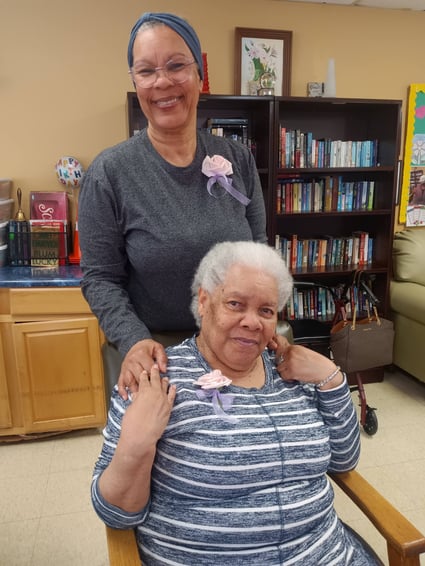
Keep in mind that parents who now reside in assisted living are still primarily independent. They may be getting specific types of help, and that’s a big plus. But it’s up to them to decide if and how you can provide other types of assistance. Spending quality time with you is probably tops on their list.
 Help Them Set the Stage for a More Carefree Daily Life
Reducing stress and boosting wellbeing literally enables seniors to live longer and thrive. Encourage your parents to offload tasks that someone else can do. Yard work, household maintenance, cleaning, and so on are time-consuming and physically demanding. Isn’t it time to retire from all that? If Mom loves gardening, let someone else do the mowing, so she can concentrate on the more intimate hands-on tasks.
Struggling with activities of daily living such as dressing, bathing, and mobility can feel disheartening. Hiring a professional in-home caregiver can help get things done. And some seniors find it less uncomfortable to accept very personal help from a third-party rather than a family member. If Dad isn’t ready for that, suggest small changes that can make daily life safer and easier:
Adjust kitchen tasks so they can be performed sitting at a table rather than standing at the counter. Look for and fix fall hazards around their home.
 Talk to your Mom and Dad about strategic downsizing. Reducing clutter not only reduces the risk of falls, but it can also help streamline daily life. And do they really need all that stuff they have accumulated over the years? Paring down can feel surprisingly freeing, even when you aren’t considering moving.
Encourage Mom and Dad to get a good night’s sleep to stay healthy and to regularly exercise to maintain strength, dexterity, balance, and mobility. If it gets them moving to have you join them, make exercise a family affair.
Moderation Is Key
You want to do everything you can for your parents, but think twice. The more you do, the more you may inadvertently erode their self-confidence as well as their dignity. On the other hand, the more they can do for themselves – perhaps with a helping hand just as needed – the stronger they will feel emotionally and physically. And that’s the way to remain independent as long as possible.
Magnolia Manor is Here to Help
Nonetheless, the time may come when you, at least, can see that one or both of your parents need professional assistance or a safer, more supportive environment. That's a conversation that can be fraught with emotion — we know. But you don't have to navigate it alone. Think of our experienced staff at Magnolia Manor as a trusted resource, and don't hesitate to reach out. When you're ready to explore what senior living actually looks like, we invite you to schedule a tour or call us at 855-540-LIFE (5433). We'd love to help you and your family find the right path forward.


Learn what different types of senior living care are available and which one best fits your needs now and in the future.