
Download our Free Guide:
Senior Living Explained
Learn what different types of senior living care are available and which one best fits your needs now and in the future.

%20.jpg)
%20.jpg?width=720&height=480&name=2025%20St.%20Marys%20Low%20Country%20Boil%20(2228)%20.jpg)
Having trouble sleeping? You are not alone. About one-third of adults in the US say they don’t get enough rest. That’s not only frustrating, it’s not healthy, especially if you’re older.
We love to talk about living the carefree life at Magnolia Manor, with so many ways residents can socialize, pursue hobbies, and otherwise stay active. However, it is equally important for seniors to take time to relax, and especially to get plenty of restorative sleep.
.jpeg?width=425&height=401&name=Americus%202025%20Fall%20Festival%20(1651).jpeg) “It is a common misconception that older adults require less sleep than younger individuals,” according to the Sleep Foundation. All adults, they say, need seven to nine hours of sleep nightly. Good quality sleep. Occasional insomnia affects everyone, but when it becomes chronic, it can become dangerous for seniors.
“It is a common misconception that older adults require less sleep than younger individuals,” according to the Sleep Foundation. All adults, they say, need seven to nine hours of sleep nightly. Good quality sleep. Occasional insomnia affects everyone, but when it becomes chronic, it can become dangerous for seniors.
Among the many new breakthroughs in Alzheimer’s research, the Mayo Clinic Study of Aging revealed that “chronic insomnia is linked to accelerated cognitive decline and a 40% increase in the risk of cognitive impairment.” The link between chronic insomnia and cognitive decline was most notable among those who slept less.
Lack of sleep also increases risk of falling and is associated with health issues, including heart and kidney disease, stroke, depression, and obesity. And, of course, it’s harder to get excited about the day’s activities when you just don’t feel very peppy.
Aging Affects Sleep Patterns
.jpg?width=425&height=283&name=Residents%20on%20a%20Cellphone_Macon_5.2024%20(866).jpg) Circadian rhythms determine when your body feels tired, or wide awake, or hungry, among other things. But biological changes that come with aging can disrupt circadian rhythms, causing many older adults to wake up earlier in the morning and feel tired earlier in the evening, or even afternoon.
Circadian rhythms determine when your body feels tired, or wide awake, or hungry, among other things. But biological changes that come with aging can disrupt circadian rhythms, causing many older adults to wake up earlier in the morning and feel tired earlier in the evening, or even afternoon.
In addition, The Sleep Foundation says that sleep may be fragmented for older adults, awakening multiple times during the night and feeling less rested in the morning. This is due to spending “more time in the earlier, lighter stages of sleep and less time in the later, deeper stages.”
Sound Tips for Sounder Sleep
.jpg?width=425&height=319&name=Buena%20Vista%202025%20NSNCW%20Spa%20Day%20(5104).jpg) Self-care is key to senior health. So what can you do to help yourself get enough good, quality sleep? Here are some easy, effective steps you can take to prepare your body and mind for rest so you can feel sharper when you wake:
Self-care is key to senior health. So what can you do to help yourself get enough good, quality sleep? Here are some easy, effective steps you can take to prepare your body and mind for rest so you can feel sharper when you wake:
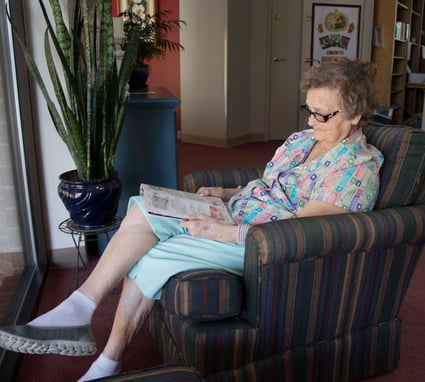 Deliberately relax with quiet time – reading, soft music, or meditation.
Don’t let insomnia keep you from getting the most out of each day! Adopting the tips we’ve outlined above can help improve your sleep preparedness so you get better, more restorative results. Here’s to a good night’s sleep!
Rest Easier with Support You Can Trust
True peace of mind plays a powerful role in quality sleep. When you feel safe, supported, and free from daily worries, it’s easier to relax your body and quiet your mind at night.
At Magnolia Manor, residents benefit from a thoughtfully designed environment, attentive staff, and a strong sense of community—all of which help reduce stress and create the calm that leads to better rest. Knowing help is available if needed, routines are well supported, and each day brings meaningful connection allows residents to focus on living well and sleeping soundly.
If you or a loved one are ready for a lifestyle that supports health, comfort, and peace of mind—day and night—we invite you to learn more. Call us at 1-855-540-LIFE or schedule a tour online to experience Magnolia Manor for yourself.


Learn what different types of senior living care are available and which one best fits your needs now and in the future.