
Download our Free Guide:
Senior Living Explained
Learn what different types of senior living care are available and which one best fits your needs now and in the future.



As the year-end holidays approach, we are excited to get together with extended family and long-time friends, especially those we don’t see every day. However, visiting Aunt Kitty or even your own Dad can feel uncomfortable if they have some level of dementia. So let’s talk about how you can communicate with them in a way that is loving and respectful and works positively for both of you.
The Experience is Very Personal
 Alzheimer’s and other forms of dementia affect each person a bit differently. In fact, experts at Harvard Health tell us that “a patient’s ability to understand others and express themselves can fluctuate from day to day or even hour to hour.” And, of course, someone in the early stages of cognitive decline or memory loss can still communicate verbally better than someone with more advanced symptoms. You’ll want to tailor your timing and conversation accordingly.
Do not ignore someone with dementia simply because you aren’t sure how to communicate with them. If you are in a group, make an overt effort to draw them in so they don’t feel left out.
Keep in mind that you’re talking to an adult, someone who is likely well aware of their progressing limitations. We all know what it’s like to forget where we set our cup of coffee, so just imagine how frustrated they must feel! It’s OK to acknowledge that if they get stuck or confused as you’re talking. Your understanding preserves their dignity and can help head off feelings of isolation.
Start by proactively introducing yourself if there’s a chance the person may not recognize or remember you. Hi, Sally, I’m Irene. We haven’t seen each other in some time.
Consider the Surroundings
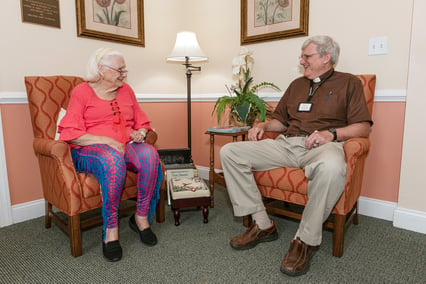 For those with dementia, noisy, busy environments can be distracting, even upsetting. A quiet, calm setting without background sounds from a radio, the TV, or multiple other conversations will allow the two of you to focus on one another. Good lighting can help, too. Sit facing the person so they can see and hear you clearly. Make eye contact, nod, and use facial expressions just as you do when talking to anyone else.
Keep It Simple
 If you normally speak fast or loudly, slow down and tone it down. Stick to one topic at a time to avoid confusion. Use short sentences that are easier to understand, and allow time for the person to process what you just said and formulate a response without interrupting them. If they can’t remember a word, ask them to describe the object or the context. Keep the conversation short overall to avoid tiring them, which can exacerbate cognitive difficulties.
If you’re asking them questions, keep those simple, too, because open-ended questions can be confusing. Offering choices is a sign of respect, but instead of asking what they want to eat or drink, ask if they would prefer coffee or water. Or just ask if they’d like a piece of cake.
Share Things You Love or Your Own Memories
 Telling your stories can help someone with dementia recall a similar experience of their own. Sharing photos or interacting with a familiar physical object can help trigger memories and encourage the person to open up. Listening to music together can be particularly useful, as studies show that even those with more advanced dementia can often remember songs and lyrics from their past.
If you’re feeling overwhelmed, you can keep it simple for yourself as well as your conversation partner who has dementia. The National Institutes of Health have created an infographic that spells out the five key dos and don’ts so they are easy for you to remember.
Magnolia Manor is Here to Support You When You Need It
Dementia can make family gatherings feel uncertain, but a little patience and preparation can turn them into moments of real connection. At Magnolia Manor, we understand how much these visits matter, and our caring team is here to support you and your loved ones every step of the way. If you have questions about memory care or are considering senior living for someone you love, we’d welcome the chance to talk. Call us at 1-855-540-LIFE (5433) or contact us online to schedule a tour at one of our eight campuses today!


Learn what different types of senior living care are available and which one best fits your needs now and in the future.